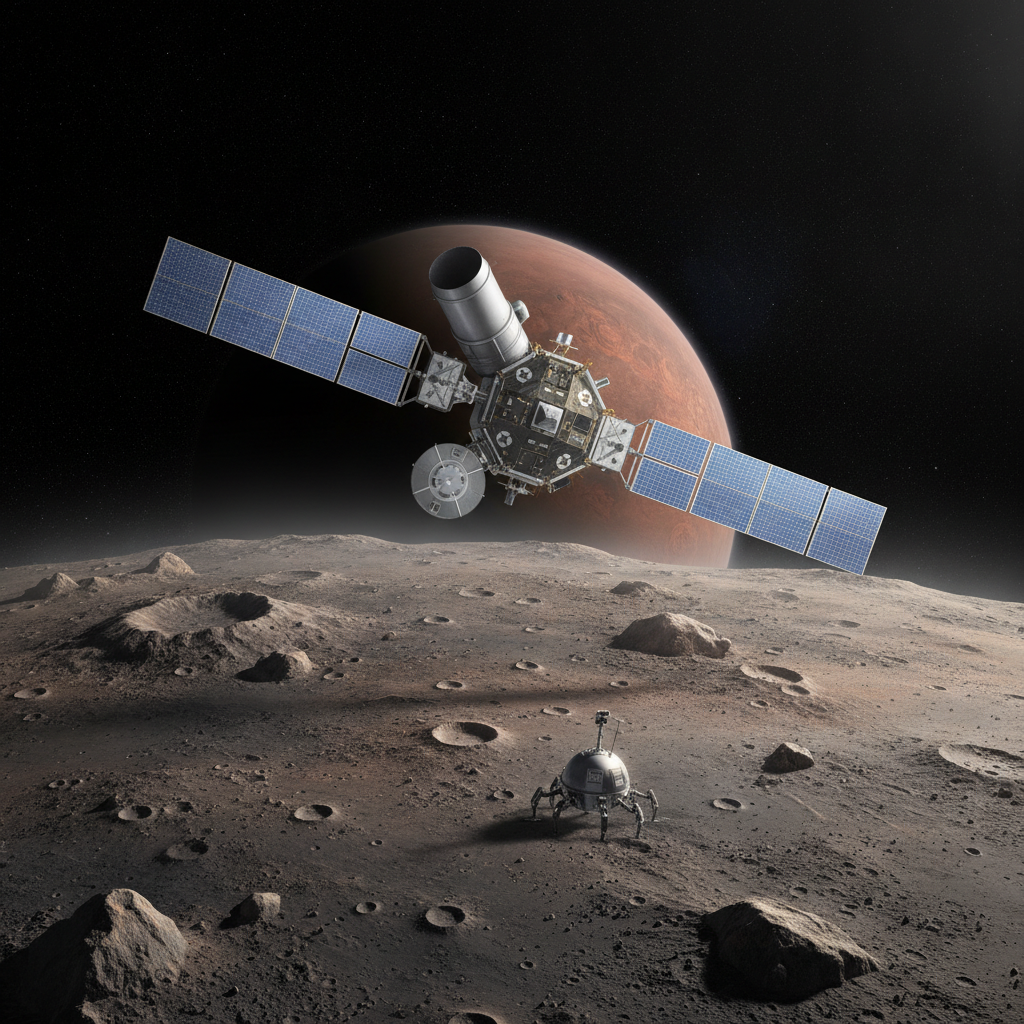
On November 7, 1996, NASA launched the Mars Global Surveyor, ending a nearly twenty-year hiatus in Red Planet exploration following the 1975 Viking missions. The spacecraft went on to spend nearly a decade orbiting Mars, fundamentally reshaping scientific understanding of the planet’s environment.
During its nine active years, the orbiter transmitted more than 240,000 photographs back to Earth. Its instruments examined the entire Martian surface, atmosphere, and interior. Among its most notable discoveries were surface gullies and channels indicating that liquid water still periodically flowed down hillsides in short bursts, alongside signs of potential climate change at the Martian south pole.
Mars Global Surveyor also mapped deposits of hematite, an iron-bearing mineral that typically forms in the presence of liquid water. Those orbital detections prompted NASA to target the mineral during subsequent exploration, successfully directing the Spirit and Opportunity rovers to landing zones where both confirmed the mineral’s presence on the surface.
Beyond orbital mapping, the probe served as a crucial communications pipeline, relaying surface data back to Earth for the Sojourner, Spirit, and Opportunity rovers. Though the mission operated far beyond its primary planned timeline, it came to an end in November 2006 after a spacecraft maneuver inadvertently exposed one of its batteries to direct sunlight, draining its power and ending communications permanently.
Source: space.com