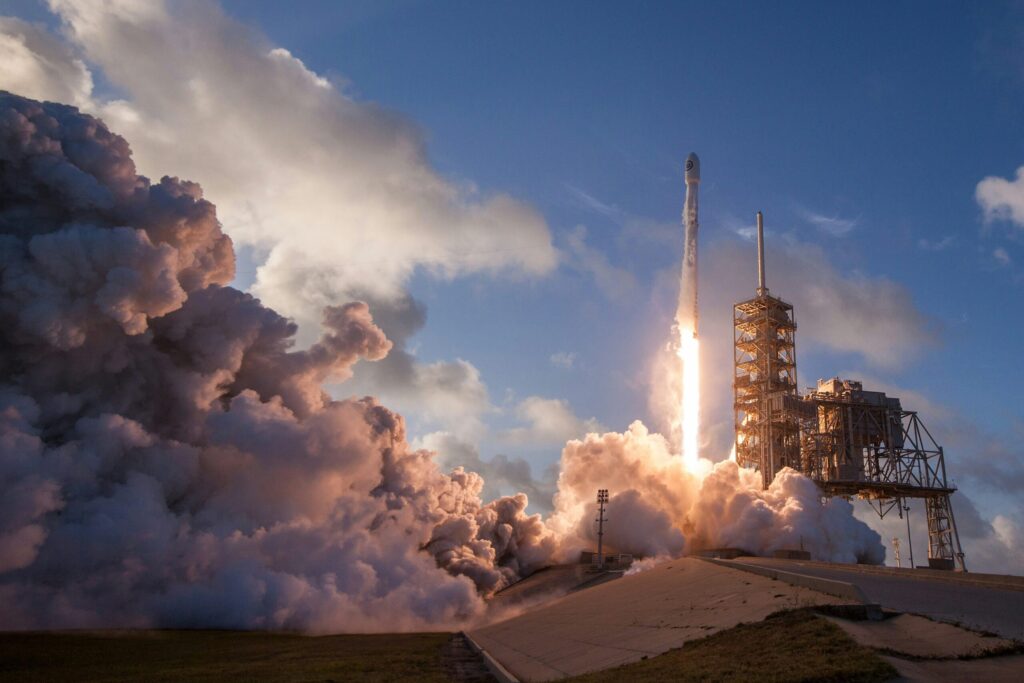
NASA is revamping its Artemis lunar landing architecture as SpaceX prepares to execute a critical in-orbit propellant transfer early next year, marking a decisive technical step toward returning astronauts to the Moon.
According to Steve Creech, NASA’s Human Landing System program manager, in an interview with Ars Technica, the first-quarter demonstration will involve two Starships—one launched from Florida and the other from Texas—docking in low-Earth orbit to transfer cryogenic methane and liquid oxygen. The test comes alongside significant revisions to the Artemis flight sequence, which saw Artemis III downgraded to a low-Earth orbit checkout mission, pushing the program’s first crewed lunar landing to Artemis IV before the end of 2028.
During the revised Artemis III orbital test, a four-person crew launched aboard NASA’s Orion capsule will dock for two days with Blue Origin’s Blue Moon lander to evaluate its life support systems. Orion will then separate and rendezvous with SpaceX’s Starship for two hours to test integrated attitude control of the combined stack, though astronauts will not enter Starship. NASA kept Starship’s Artemis III scope narrow to keep SpaceX focused on propellant transfer, opting instead to evaluate Starship’s life support systems via a ground-based cabin prototype at Starbase, Texas.
NASA has also overhauled mission mechanics for the subsequent surface landings to reduce vehicle demands. Planners eliminated an initial requirement that landers loiter in lunar orbit for 90 days before Orion’s arrival, while shortening initial surface stays from six and a half days down to four. Before carrying crew, both landers must complete uncrewed lunar flight tests targeted for late 2027 or early 2028. Blue Origin’s test calls for landing and then launching back toward Orion’s rendezvous path, while SpaceX’s current framework involves landing on the Moon, firing its engines to lift off again, and touching back down on the surface.
In-space propellant transfer remains Starship’s biggest operational hurdle, as the spacecraft holds 1,600 metric tons of propellant when filled. While SpaceX CEO Elon Musk projects needing six to eight tanker launches to supply a lunar mission once vehicle upgrades arrive, NASA’s planning models conservatively estimate up to 20 refueling flights, with initial Moon missions committed to using the current Starship V3 design.
Source: Ars Technica