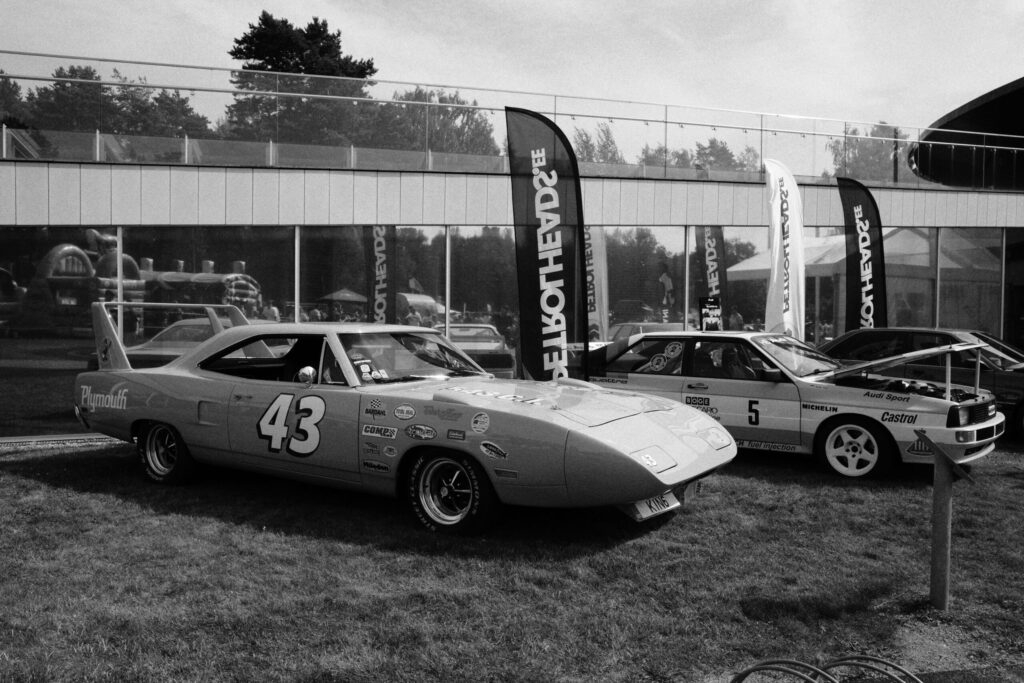
NASCAR’s high-speed “aero wars” of the late 1960s and early 1970s did not end with a direct vehicle ban, but rather through calculated regulatory changes that rendered winged machines uncompetitive. Cars such as the Dodge Charger Daytona and Plymouth Road Runner Superbird reshaped oval racing with extended noses and massive rear wings, but their dominance proved brief once the sanctioning body stepped in to halt an escalating technical arms race.
The turning point arrived ahead of the 1971 NASCAR season, when officials restricted designated aerodynamic models to a maximum engine displacement of 305 cubic inches. In contrast, standard-bodied competitors were permitted to continue running significantly larger big-block V8 engines. Stripped of the displacement needed to match their conventional rivals, race teams had virtually no competitive reason to keep fielding the specialized aerodynamic bodies.
The rules crackdown followed a period of unprecedented speeds on high-banked superspeedways. On March 24, 1970, Buddy Baker drove a Charger Daytona past 200 mph on a closed course at Talladega, setting an official milestone. That achievement demonstrated how downforce and drag reduction could unlock immense speed without relying purely on added horsepower. Alongside Chrysler’s entries, Ford and Mercury had joined the aerodynamic battle with modified designs like the Torino Talladega and Cyclone Spoiler II, triggering concerns that escalating engineering expenditures would overshadow driver ability and team parity.
NASCAR’s homologation rules at the time mandated that manufacturers sell road-legal counterparts to the public to qualify for competition. That requirement produced roughly 503 road-going Dodge Charger Daytonas for 1969 and approximately 1,935 Plymouth Superbirds for 1970. Although their frontline racing careers were cut short by the 1971 engine restrictions, both models remain among the most recognizable collector cars of the muscle car era.
Source: motor1.com