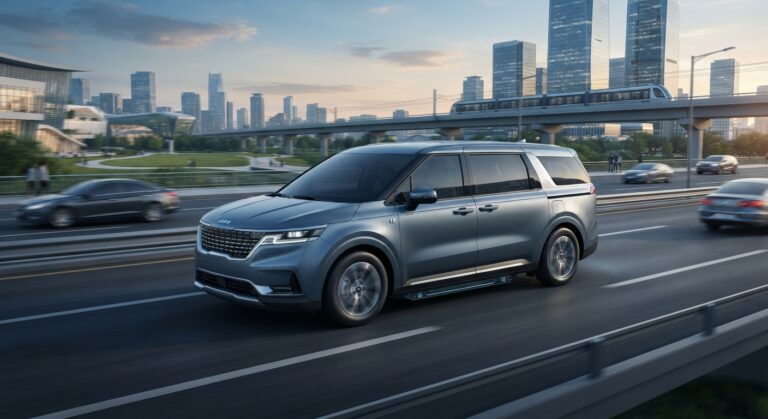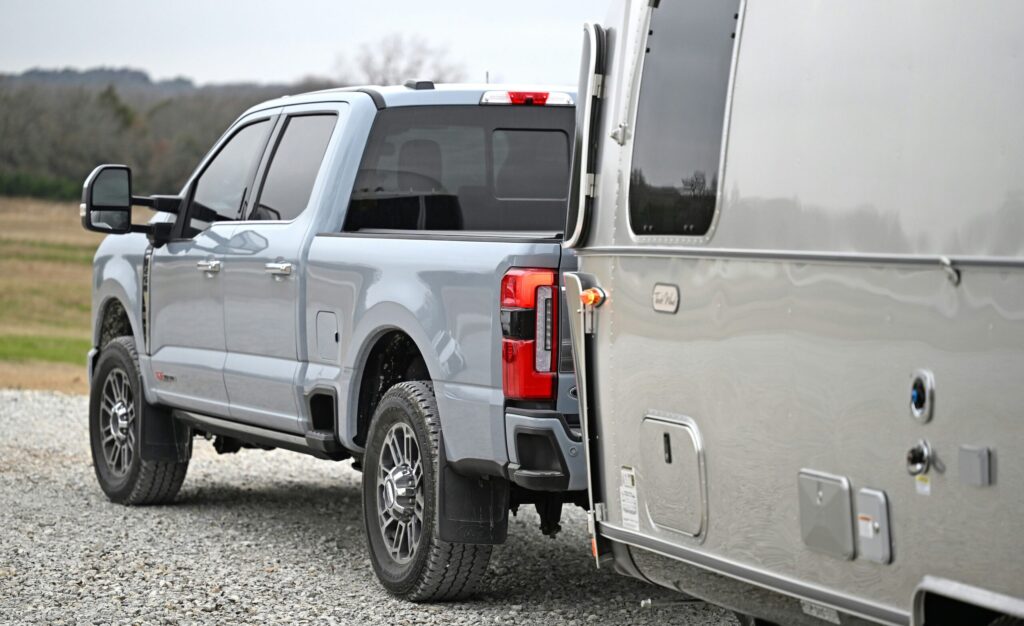
Full-size pickup trucks retain a substantial towing advantage over sport utility vehicles, maintaining significantly higher pulling capacities even when both models share identical platforms and structural bones.
The gap is evident in direct comparisons across major automakers. The 2026 Chevrolet Tahoe shares a platform with the Chevrolet Silverado 1500, yet the Tahoe maxes out at an 8,400-pound tow rating compared to the Silverado’s 13,300 pounds. Ford exhibits a similar disparity, with the 2026 Expedition rated to pull up to 9,600 pounds while the 2026 F-150 reaches 13,500 pounds. Even the class-leading Jeep Grand Wagoneer tops out at 10,000 pounds, leaving it behind mainstream light-duty pickups, while Consumer Reports cautions drivers against operating any vehicle at or near its maximum rating.
Engineering differences account for the divergence in capabilities. Unlike unibody SUVs or one-piece passenger bodies that are too rigid to withstand chassis flex, full-size pickups place separate cab and bed structures on a heavy frame to manage torsional twisting. Trucks also commonly utilize traditional rear leaf springs rather than softer coil springs, offer longer wheelbases for enhanced stability, and provide heavy-duty cooling packages alongside integrated trailer brake controllers.
Heavy-duty capabilities expand the margin even further. Equipped with a High-Capacity Gooseneck Tow Package, a 2026 Ford F-450 is rated to tow up to 40,000 pounds, benefiting from specialized diesel engines producing up to 1,200 pound-feet of torque. Placing a gooseneck or fifth-wheel hitch directly over the rear axle substantially increases payload distribution, whereas swapping to a conventional bumper hitch on a Super Duty drops the maximum tow rating by 10,000 pounds.
Despite lower hauling ratings, SUVs maintain advantages in everyday usability and passenger logistics. Full-size pickups max out at six occupants, whereas three-row models like the 2026 Chevrolet Suburban can seat up to nine passengers while offering 144.5 cubic feet of enclosed cargo room behind the front seats. SUVs also lead in ride comfort and efficiency, with hybrid crossovers such as the 2026 Toyota RAV4 achieving up to 43 mpg combined compared to a 2.7-liter F-150’s 19 mpg city and 25 mpg highway ratings.
Source: jalopnik.com