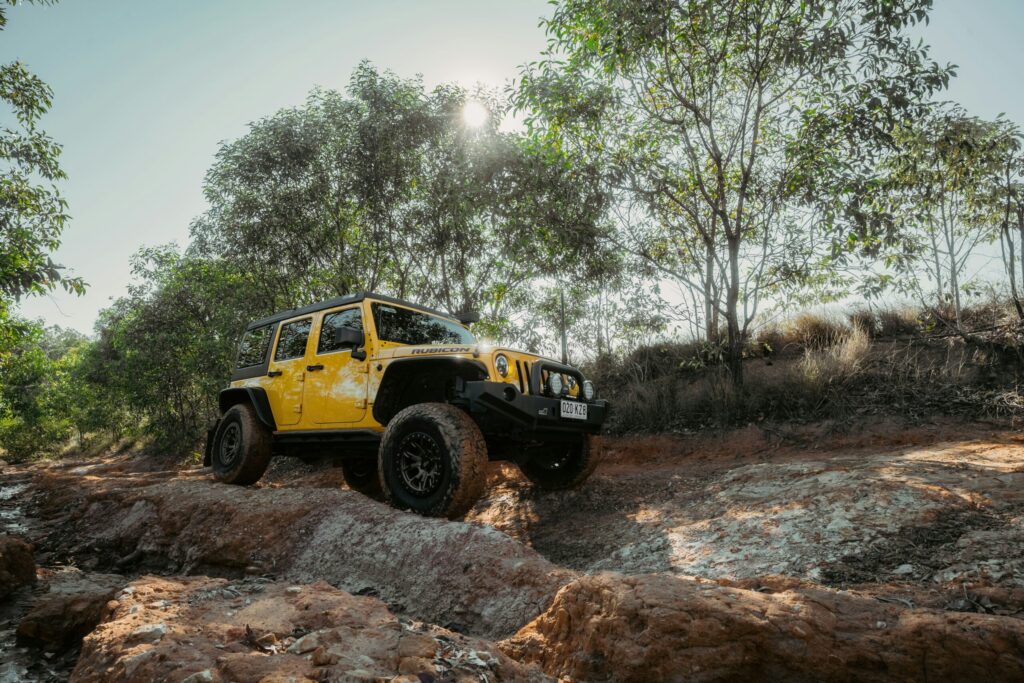
Bolting the widest possible tires onto an off-road rig does not automatically produce more trail grip, as changing tire width alters only the shape of a contact patch rather than its total surface area. A wider tire forms a broad, short contact patch, whereas a narrower tire creates a long and slender footprint, with each geometry suited to vastly different terrain conditions.
Narrow tires hold a performance edge when tackling shallow, loose, or slick surfaces sitting atop solid ground, including snow, rain, and light mud. The narrow leading edge acts like a blade to cut through loose top layers, allowing the rest of the elongated contact patch to bite into firm ground underneath. When deflated, that longer footprint also rolls over uneven terrain similarly to a continuous track.
Beyond surface grip, narrower setups reduce overall tire weight and rotational inertia. The lower unsprung mass eases suspension movement for a smoother ride, reduces mechanical wear, and demands less energy to accelerate and brake, which helps preserve fuel economy and driving range. Slimmer profiles are also typically cheaper to buy and far less likely to rub against bodywork or suspension parts without specialized vehicle lift kits.
Conversely, broad tires excel where flotation is essential to avoid sinking, particularly on deep mud and loose sand without a solid base below. The wide stance also shields wheel rims from rock impacts and provides increased lateral stability to handle heavy acceleration in high-horsepower vehicles. Ultimately, drivers looking to maximize traction without buying new rubber can lower their tire pressure by 10 to 15 pounds per square inch, which genuinely enlarges the contact patch to mold around rugged obstacles.
Source: jalopnik.com