While utility vehicles are defined by practical passenger and cargo capacity, the two-seat SUV remains one of the most eccentric footnotes in automotive history. Jalopnik highlighted the oddity of the category, pointing out that the diminutive Suzuki X-90 stands as virtually the only mass-market, two-seat sport utility vehicle ever produced for global buyers.
Introduced in the mid-1990s, the X-90 measured just 146 inches in length and carried a modest 1.6-liter four-cylinder engine producing 95 horsepower. Despite its unusual proportions, it maintained genuine off-road credentials with traditional body-on-frame construction, four-wheel drive, and a live rear axle. The unusual format failed to catch on with consumers, moving just 7,205 units in the United States over a three-year span starting in 1996.
Beyond Suzuki’s commercial gamble, two-seat off-roaders have largely been confined to exotic coachbuilds and bespoke projects. Swiss builder Sbarro created the Monster G in 1987, a one-off commission using a modified Range Rover chassis, a 350-horsepower 6.3-liter Mercedes-Benz V8, wheels sourced from a Boeing 727 airliner, and an onboard folding motorcycle. In the 1990s, French automaker Aixam produced five or six examples of the Mega Track, an all-wheel-drive, lifted two-seater stretching nearly 197 inches long and powered by a Mercedes-sourced V12 engine.
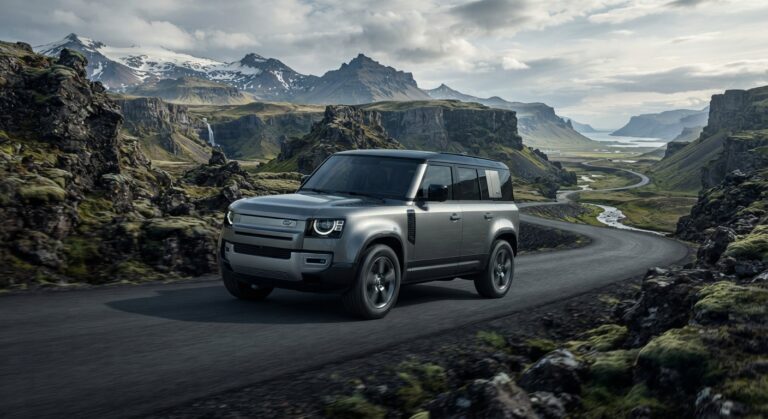
The layout also traces back to utility origins, beginning with the 1945 Willys CJ-2A, which came standard with only a driver’s seat while optional passenger seating was offered separately. In modern international markets, the two-seat SUV persists primarily in commercial fleets, with stripped-down two-seat versions of the Toyota Land Cruiser and the Land Rover Defender 90 Hard Top featuring dedicated cargo partitions behind the front row.
Source: Jalopnik