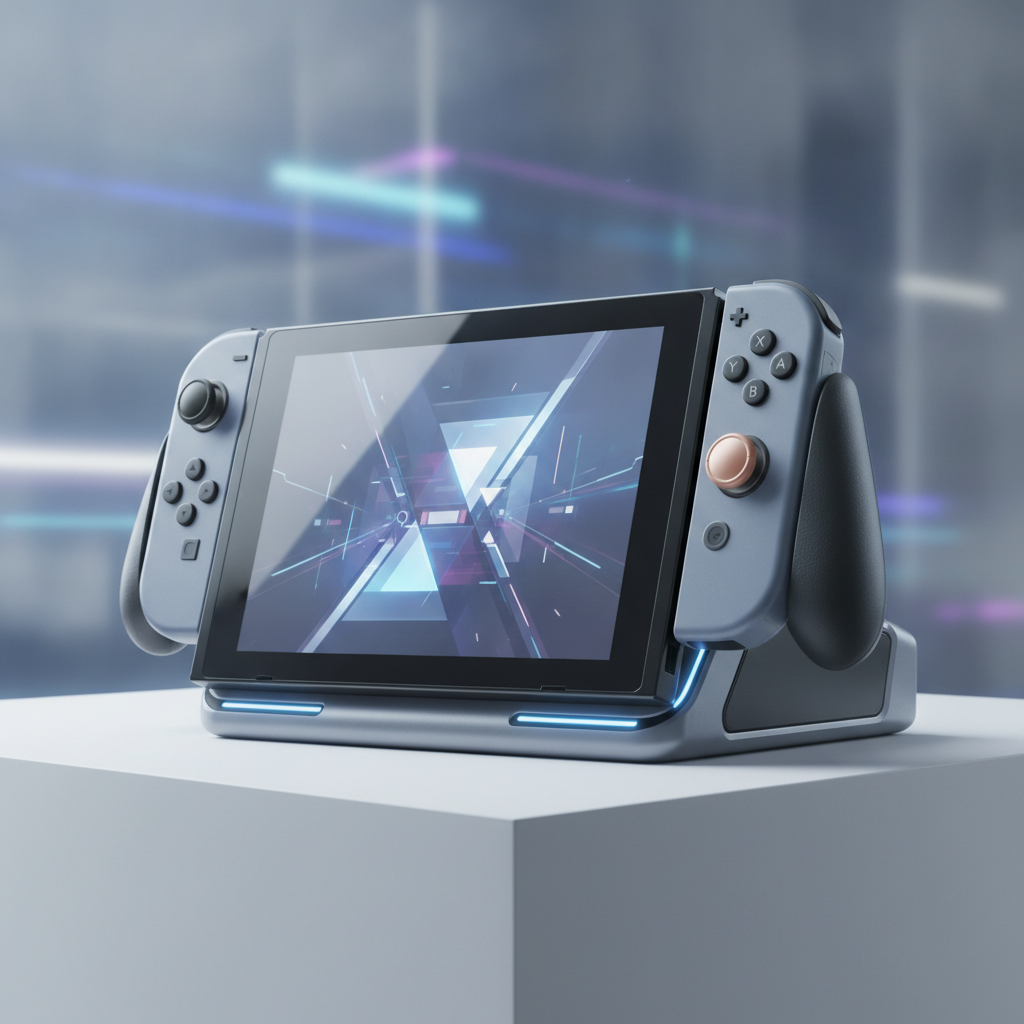
Security researcher Sammy Hajhamid has published a tethered, software-based jailbreak for the Nintendo Switch 2 that achieves userland execution on the console. The method allows users to run homebrew applications, extract save files, interface with peripheral hardware via memory-mapped I/O, and modify Switch 2 software.
The attack chain begins within the original Nintendo Switch release of SmileBasic 4, an application environment that executes on the newer hardware. Hajhamid identified a 32-bit integer overflow triggered during array item removal by utilizing an automated test harness paired with OpenAI’s Codex. That flaw yielded an array pointer capable of reading and writing to console memory. From there, Hajhamid leveraged a secondary buffer overflow inside the operating system’s FileSystem services module, which exposed a cached data pointer and ultimately permitted arbitrary read/write actions alongside native code execution via a forged filesystem process.
To run the exploit, users need a local Linux or macOS machine on the same network operating a dedicated Node.js package. The technique functions on system firmware version 23.0.1, though its permissions remain confined to userland rather than achieving unrestricted kernel-level control. As a proof of concept, Hajhamid showcased custom character modifications running in Mario Kart World, while other community developers have demonstrated functional userland Vulkan GPU tools.
Nintendo has already delisted SmileBasic 4 globally from the Switch eShop, though a Japanese demo build remained available at the time of reporting. A previous iteration of the same software on the Nintendo 3DS was similarly exploited in 2016 before being removed from sale. Unlike the hardware-level flaw found on original launch-model Switch consoles in 2018, this vulnerability is software-based and expected to be addressed in forthcoming firmware updates.
Source: arstechnica.com