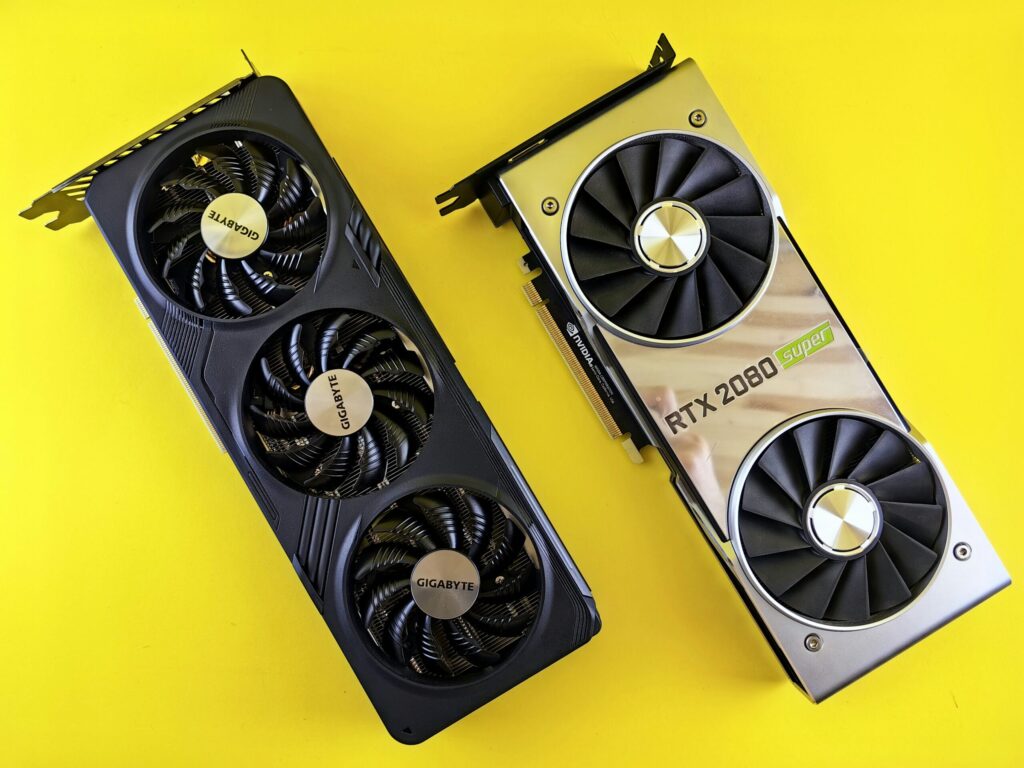
An open-source utility called gpu-unlock can substantially boost compute speeds on Nvidia Ampere GeForce graphics cards without requiring modified drivers or permanent firmware flashing. Developed by GitHub user Zagitta, the tool removes an artificial instruction-issue rate cap on FP16 and BF16 Tensor Core operations using FP32 accumulation, which Nvidia limited to approximately half the performance found on its enterprise-grade GPUs.
The software operates via a Linux kernel module that intervenes before the standard Nvidia display driver initializes. It adjusts specific hardware speed-selection registers, resets the graphics processor, and then passes control over to the standard, unpatched driver, leaving the card’s original VBIOS intact. The technique is derived from prior reverse-engineering work originally used to alter Nvidia CMP cryptocurrency mining cards.
Early community benchmarks indicate massive throughput gains in specific mathematical calculations. In one test, an RTX 3090 increased its BF16 matrix multiplication performance from 77.5 TFLOPS to 129.6 TFLOPS, while TF32 operations rose from 40.2 to 69.8 TFLOPS. An RTX 3090 Ti similarly saw its BF16 throughput climb from 87.5 to 157.4 TFLOPS. In real-world software, tests using ComfyUI showed between 47% and 59% faster image generation on an RTX 3090 Ti, while local large language model testing on an RTX 3090 yielded a 16% boost during long-context prompt processing, though token generation speeds remained unchanged.
Despite Nvidia’s DLSS relying on Tensor Cores, there are currently no independently verified benchmarks demonstrating framerate improvements in PC gaming. The project is primarily designed for Linux and remains experimental, though an early community port has successfully booted into Windows on at least one test machine.
Source: Notebookcheck