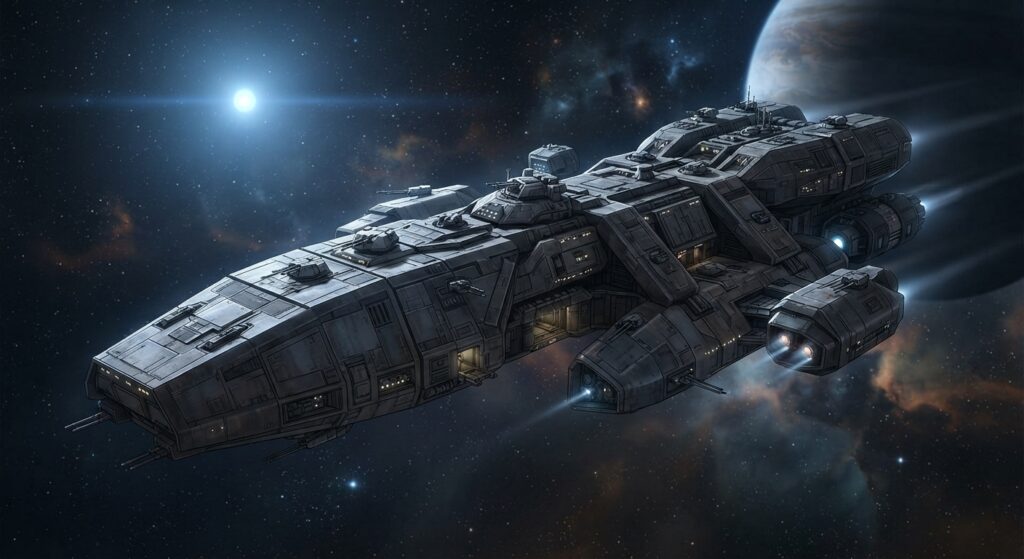
Two decades after Battlestar Galactica aired the liberation of New Caprica in season 3’s “Exodus, Part 2,” the iconic battle sequence remains a landmark achievement shaped as much by physical studio limitations as narrative ambition. While the daring atmospheric free-fall known as the “Adama Maneuver” captured audience imaginations, the episode’s climactic sacrifice of the advanced battlestar Pegasus was driven by the practical need to reclaim studio soundstage space and consolidate production resources.
According to showrunner Ronald D. Moore’s production commentary, maintaining dual battlestar sets strained the production by splitting cast and crew across separate locations while eating up valuable stage floor required to build Cylon basestar interiors. Writers briefly weighed destroying the titular Galactica instead to move the cast onto the modern Pegasus, but maintaining the series’ namesake won out. Despite visual effects artists hanging a “SAVE THE PEGASUS” plea outside their work area, the warship was written out by ramming one enemy basestar before its severed, burning flight pod took out another.
Bringing that destruction to the screen pushed Atmosphere Visual Effects to its technical limits under tight deadlines. Lead compositor Brenda Campbell oversaw roughly 250 to 300 elements across roughly 10 complex shots in just a week and a half, with dense interactions between explosions, debris, and weapons fire preventing the team from using pre-composited shortcuts. Artists also populated backgrounds with hundreds of hand-animated Cylon raiders absent from initial previsualization, blanketing the sequence in heavy digital grain to preserve the show’s signature handheld documentary aesthetic.
The technical gamble paid off critically, earning “Exodus, Part 2” the 2007 Primetime Emmy for Outstanding Special Visual Effects for a Series alongside a Visual Effects Society award. Beyond the technical accolades, the high-stakes two-part structure helped amortize the substantial financial cost of shooting the ground occupation storyline while permanently resetting the show’s core fugitive premise.
Source: Polygon