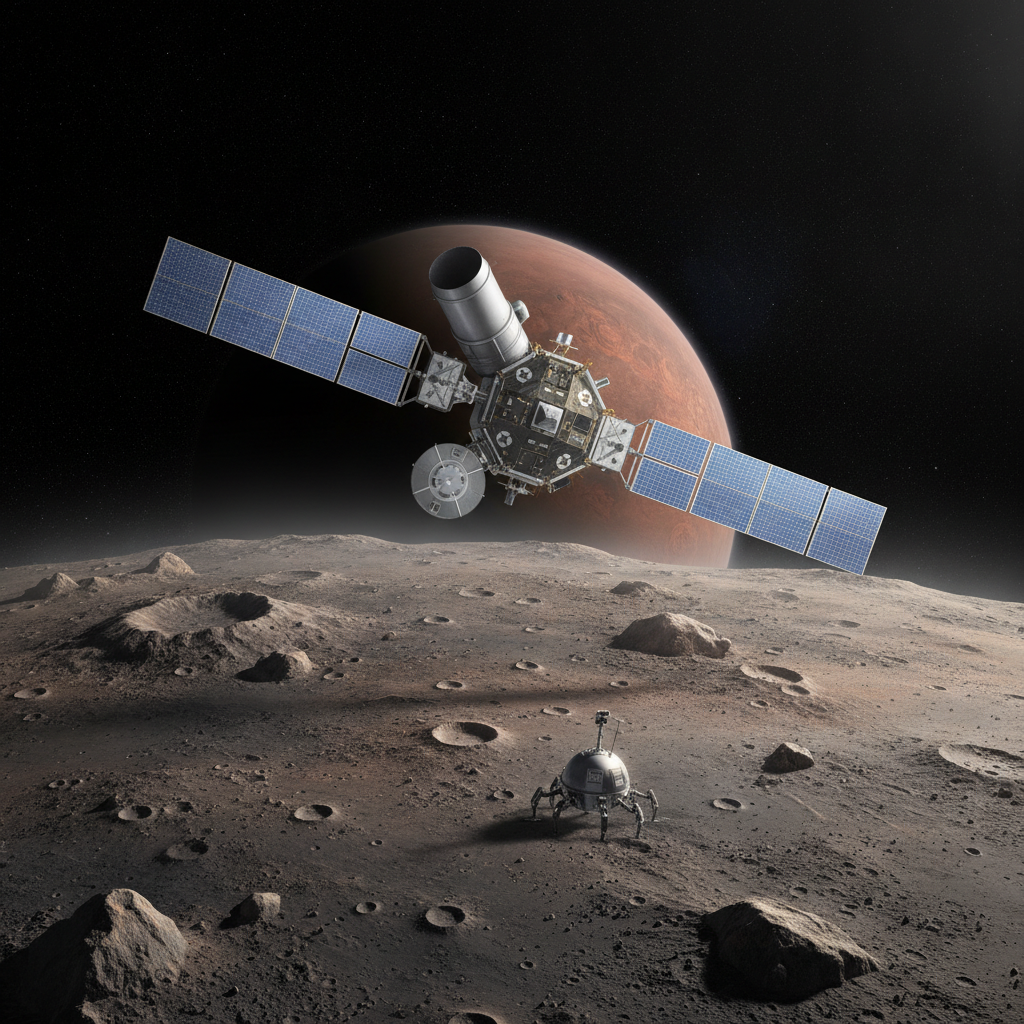
NASA’s Voyager 1 spacecraft has crossed a historic boundary in deep space, reaching an orbital distance of one light-day from Earth. The milestone means that commands transmitted from mission controllers now take a full 24 hours traveling at the speed of light to reach the probe.
Voyager 1 achieved the one-light-day distance on Wednesday, Nov. 18. Its sibling craft, Voyager 2, followed a different trajectory to observe Uranus and Neptune after both probes launched in 1977 and is not projected to reach that same distance until 2035.
Having crossed out of the heliopause into interstellar space in August 2012, Voyager 1 continues to gather measurements on energetic particles, plasma density, and the surrounding magnetic field. Researchers at the Jet Propulsion Laboratory are studying how these local conditions evolve as the probe moves farther away, aiming to discover where solar influences such as pressure fronts subside and pristine interstellar space begins.
Operating the probe requires careful resource management as its nuclear power supply degrades. Both Voyager probes lose approximately 4 watts of output annually from an initial 470 watts at launch. Following a power redistribution maneuver earlier this year to conserve energy, mission controllers do not anticipate needing major operational adjustments until after the spacecraft pass their 50th launch anniversaries in August and September next year.
Keeping the mission alive remains challenging given the cold thermal conditions of interstellar space and unforeseen hardware hurdles. The spacecraft briefly lost communication with Earth for roughly 48 hours last month before recovering, and communication schedules must constantly be coordinated around terrestrial factors like severe weather affecting Deep Space Network ground antennas.
Source: space.com