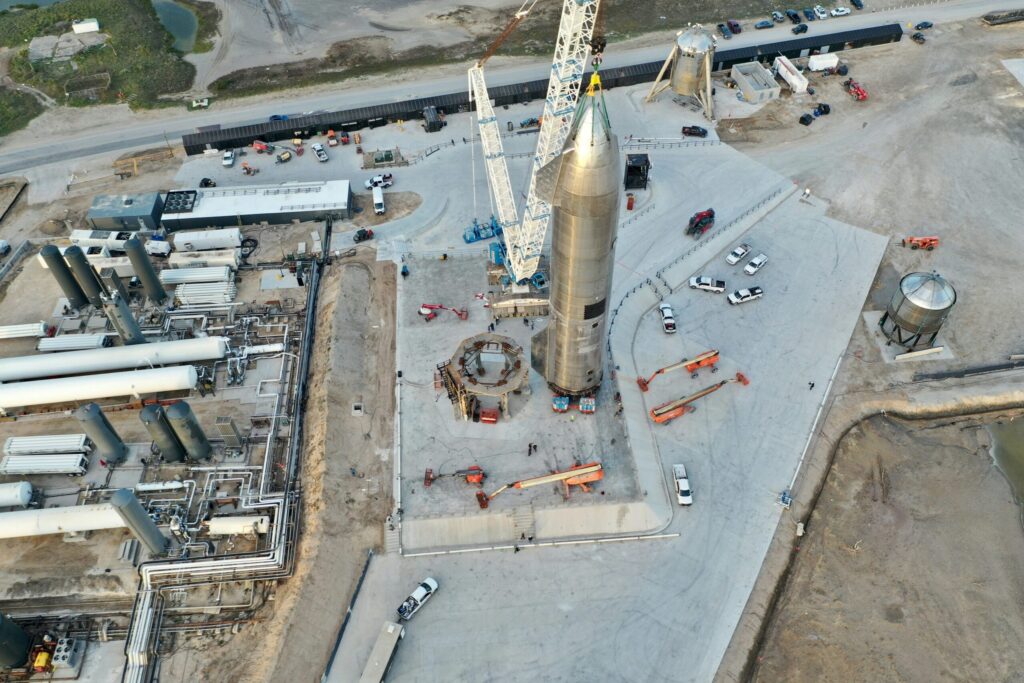
SpaceX is preparing to launch its Starship megarocket on Flight 15, aiming for an unprecedented mission that attempts to catch both vehicle stages back at the launch site using the pad tower’s mechanical “chopstick” arms. Liftoff is scheduled from the company’s Starbase facility in South Texas during a 75-minute window starting at 5:45 p.m. EST.
The mission marks a critical evolution in SpaceX’s push for full and rapid reusability. While the company has already retrieved the massive Super Heavy booster out of midair on three previous test flights, it has never attempted to catch the upper-stage spacecraft, known simply as Ship. Because the upper stage travels significantly faster and farther into low Earth orbit, recovering it presents a substantially greater engineering hurdle. SpaceX noted in its mission overview that a successful outcome would represent the first complete recovery of an orbital launch system.
Unlike previous brief test runs, Flight 15 is scheduled to span more than 22 hours across two days. The Super Heavy booster will separate shortly after launch and touch down back at the Starbase launch mount roughly 6.5 minutes following liftoff. The upper stage will continue into orbit, where it will deploy 26 next-generation Starlink V3 satellites over a 42-minute window starting about 35 minutes after launch, marking only the second batch of V3 hardware sent into space.
Ship will remain in orbit before making its return attempt to Starbase for the chopstick catch on Saturday afternoon, approximately 22.5 hours into the mission. If flight controllers detect any anomalies or technical issues with the vehicle during its time in orbit, SpaceX plans to abandon the landing catch and steer the spacecraft toward a controlled splashdown in the Pacific Ocean near Hawaii or Chile.
Source: space.com