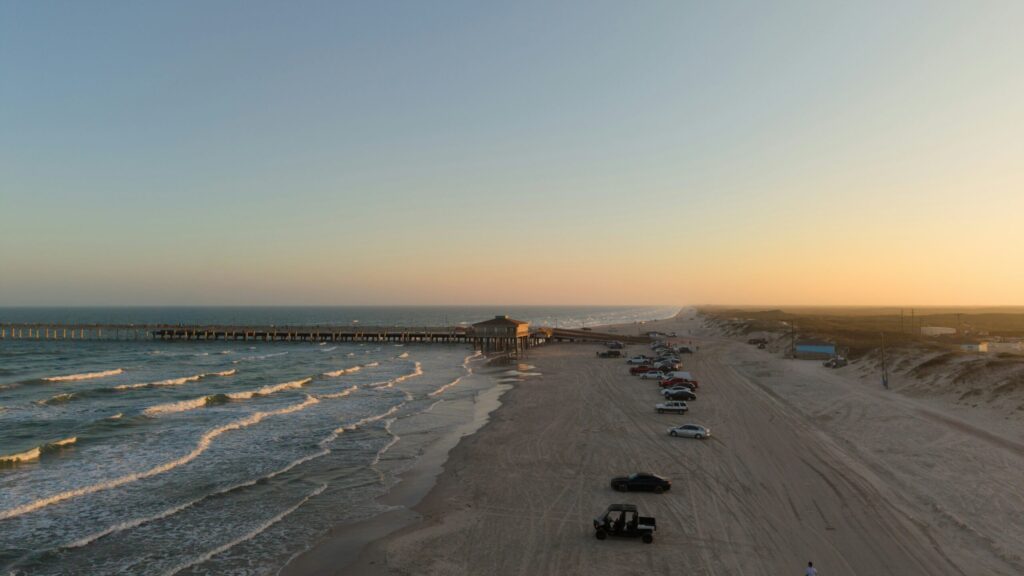
Texas legally treats its public coastlines as state highways, granting drivers legal access to more than 200 miles of drivable beach where standard roadway regulations strictly apply.
Because the shoreline carries official highway status, motorists navigating the sand must abide by typical traffic laws, including mandatory seatbelt use, though driving barefoot or in flip-flops is permitted. Public access is rooted in the 1959 Open Beaches Act, which Texans later embedded into the state constitution in 2009 with a 76.9% vote. Under the law, the area extending from the low tide mark up to the continuous vegetation line remains public domain overseen by the Texas General Land Office, though municipalities retain authority to enact driving restrictions for environmental protection or public safety.
Pricing and conditions vary considerably along the coast. While free access points exist at Boca Chica Beach near SpaceX facilities and along Galveston’s West End beaches, most locations require vehicle permits. Surfside Beach charges a $15 daily fee, whereas Matagorda Beach offers a full year of access for the same $15 amount.
For motorists seeking remote routes, the Padre Island National Seashore features a 66-mile run billed as the longest undeveloped beach drive in the world. The unserviced stretch requires four-wheel-drive vehicles to navigate soft sand and obstacles, demanding that travelers carry their own recovery gear, food, water, and fuel.
Outside of Texas, coastal driving remains permitted in select regions across the country, including California’s newly reopened Oceano Dunes State Vehicular Recreation Area, Washington’s 28-mile stretch on the Long Beach Peninsula, Cape Cod, North Carolina’s Cape Hatteras National Seashore and Corolla Beach, as well as Daytona Beach and New Smyrna Beach in Florida.
Source: jalopnik.com